
Gubi Brings Back the 1969 Lotus Lamp Collectors Named Themselves
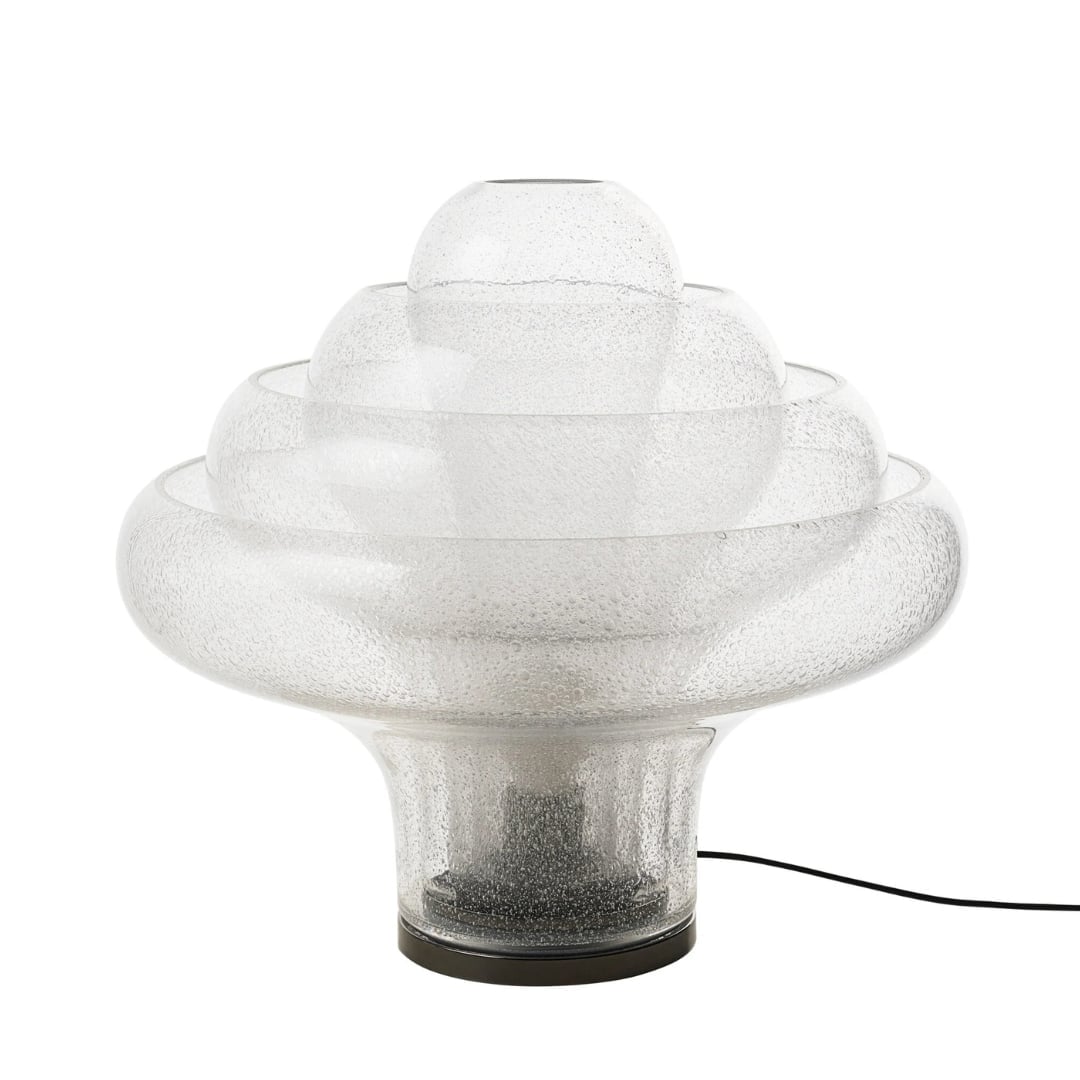
Carlo Nason's four-layer Murano glass light was made for only a few years, then chased for five decades. Gubi has put it back into production with the Nason family's help.
The Gubi Lotus lamp is a light that collectors renamed, then waited more than fifty years to see come back. Carlo Nason designed it in 1969 as the LT305. It stayed in production for only a few years. Nobody forgot it.
Design collectors gave it the nickname “Lotus lamp,” and the name stuck so firmly that Gubi has kept it for the reissue. “It was a very natural decision,” says Gubi CEO Marie Kristine Schmidt. “Collectors had already given the lamp a name that captures the design beautifully. The name had become part of the design’s identity and history, and we wanted to respect that.”
A glassmaker who didn’t want to make vases
Nason grew up in a family of Murano glassmakers and learned the island’s glassblowing traditions from the inside. Most of his ancestors and peers put that skill into ornate, decorative pieces. Nason wanted something more experimental and contemporary. He was looking at industrial product design, and in particular at the Space Age style that dominated the 1960s.
The result is a bulbous, streamlined silhouette that looks simple until you ask how it was made. The lamp is built from four separate mouth-blown shades, each nested inside the next. Together they recall a lotus flower in bloom. “The four layers of mouth-blown glass give it an almost architectural presence,” Schmidt says.
How the glow works
The stacking also shapes the light. Where the four shades overlap in the opaque centre, the bulb disappears completely. Out on the curves, where there’s only a single layer of glass, the shell turns delicately transparent. The glow that results has no glare and no harsh shadows.
Each shade is made with pulegoso, a Murano technique from the 1920s. Small air bubbles are blown into the glass, which gives it a textured, semi-opaque look. It’s also hard to standardise. Schmidt points out that natural variations in the glass and in the spread of the bubbles mean no two lamps are exactly alike. “I think that is an important part of the design’s appeal,” she says. “The craftsmanship is visible, and it gives each piece its own character.”
What Gubi changed, and what it didn’t
Gubi says it stayed faithful to Nason’s original specifications. It made one change, underneath. The steel base holds the bulb socket and secures the four shades, and it has been re-engineered for greater stability. The new construction is also easier to take apart for cleaning and bulb changes.
“These are discreet improvements that do not change the expression of the design but ensure that it works beautifully in everyday use,” Schmidt says. Her approach to any revival, she explains, is to understand the original intention and preserve what makes the piece special. Gubi worked closely with Nason’s son, Alberto, throughout development.
That collaboration took on more weight this year, since Carlo Nason died earlier in 2026. For Alberto, the reissue means a much larger audience can now see his father’s design in person. “The more you observe it, the more it unfolds, layer by layer, allowing you to discover its beauty over time,” he says. “There is a quiet magic to it: a softness, a depth, a tactile presence that makes the light feel almost like a material in itself.”
Why the old pieces keep coming back
Gubi’s pitch is that a design has to earn its place in the collection. Schmidt says the brand looks for pieces with “a strong identity, a distinct point of view and qualities that make them as relevant today as when they were first created.” The Lotus, she says, has all of them.
It’s a fair fit for the moment. The Lotus is sculptural and handmade, with flaws that are part of the look, and it’s a bit odd. A 1960s lamp built with Space Age ambition and old glassblowing skill sits easily in rooms where people want objects with a backstory. Collectors have spent decades hunting for one. Now there’s a way to buy one new.
The Lotus table lamp is available at gubi.com and select retailers.
Via Design Milk