
Beauty’s Biggest Names Are Chasing “Ozempic Face” and a $2 Billion Prize
Galderma, Natura and L'Oréal are testing treatments for the sagging and hollowing that can follow rapid weight loss. Dermatologists and surgeons say creams only go so far.
The weight-loss drug boom has handed the beauty industry a problem it very much wants to solve, and a market it very much wants to own. Galderma, Natura and L’Oréal are all testing treatments for what everyone now calls Ozempic face: the sagging, hollowing and loss of volume that can show up when the scale drops fast.
The nickname arrived as the diabetes drug became shorthand for weight loss. Experts are quick to point out that the culprit is the speed of the loss, not the drugs themselves. GLP-1 medications, including Novo Nordisk’s Ozempic and Wegovy and Eli Lilly’s Zepbound, mimic a hormone that keeps the stomach feeling full. Shed a lot of weight quickly and skin, on the face and body, can end up loose.
Why the money is following the needle
The numbers explain the interest. Pfizer estimates obesity drugs could hit $150 billion in annual sales by 2030. Boston Consulting Group’s 2025 estimates have clinical treatments for skin laxity and facial volume loss growing from about $700 million to $2 billion over the next five years.
Clinics are bracing for it. A 2024 Medical Insight report found that 53% of US aesthetics clinics expect an influx of new patients because of prescription weight-loss drugs, and 43% think the trend will drive demand for treatments aimed at the facial changes that come with them. Michael Somenek, a Washington, DC facial plastic surgeon, says he has seen a surge of requests from GLP-1 patients over the past year. “When you’re looking at a large amount of weight loss over four to six months, that can really have impact on the volume within your face,” he said.
Three companies, three approaches
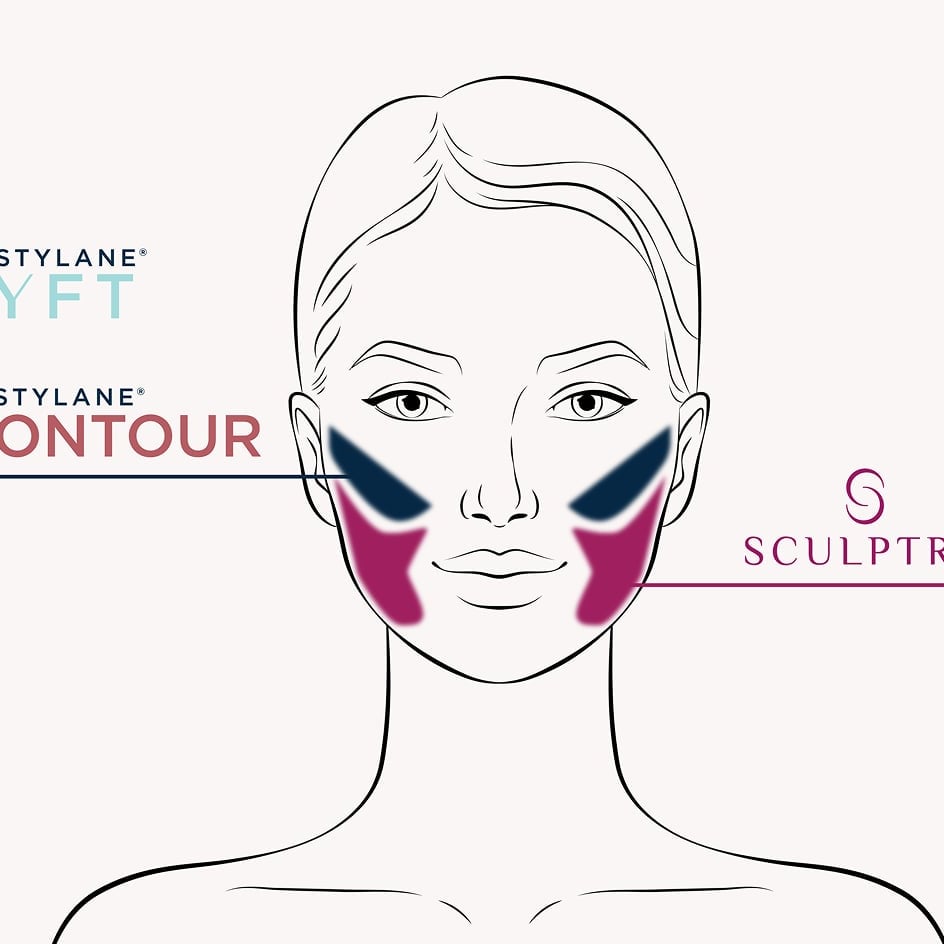
Galderma, which L’Oréal owns 20% of, ran a study last year on how its existing treatments perform on skin changes linked to GLP-1 drugs. The Swiss company makes Sculptra, which stimulates natural collagen, and Restylane, a hyaluronic acid filler. Anne-Cecile Chevrier, Galderma’s global head of injectable aesthetics, listed the complaints: “Sagginess is a concern, loss of firmness is a concern, some hollowness can be of concern and dullness can be a concern.”
Neither product is approved specifically for GLP-1 users, Chevrier noted. Still, Galderma works with tens of thousands of plastic surgeons and other aestheticians worldwide who market them to patients on weight-loss drugs.

L’Oréal is running separate studies on GLP-1 users themselves. Delphine Viguier-Hovasse, the group’s chief innovation and prospective officer, said the company is doing so “as this group of consumers is becoming increasingly important and represents a significant number of people worldwide.”
Natura is testing existing products on GLP-1 users and building a new generation of treatments. Manuel Krauss, its chief innovation and R&D officer, put it this way: “GLP-1 is creating new beauty needs at unprecedented speed, but it is also showing us that the future of beauty cannot be defined by creams alone.” He pointed to future products that could mix formats, including supplements and ingestibles. Expect the skincare shelf and the wellness shelf to get friendlier neighbours.
The reality check
Before anyone clears a bathroom shelf for a miracle jar, the specialists have notes. Beibei Du-Harpur, a consultant dermatologist and clinical lecturer at King’s College London, calls the term “Ozempic face” misleading. “The drug doesn’t melt your collagen,” she said. “Simply losing weight in a more sustainable, less rapid way would reduce some of the more severe changes people see.”

She says beauty companies are “all desperately trying to develop a GLP-1-targeting product,” but that injectable treatments such as fillers work better than creams because they reach the dermis, the middle and thickest layer of skin. The trouble sits deeper. “What’s actually losing volume is the layer below that – the fat layer – and there has never been any evidence that topical skincare products can reach that fat layer.”
Dr Graeme Glass, a plastic and craniofacial surgeon and aesthetic director at British brand LYMA, is more generous, up to a point. “To a certain extent some of these creams can be helpful,” he said. Creams act on the epidermis, and some contain molecules small enough to reach the dermis. But “they can’t alter the ligamental structure of your face,” he said, and “they can’t reposition the deep fat pads of the face… there is a limit to what these things can do.”
Then there’s the age factor. According to analysts at the health policy organisation KFF, GLP-1 drugs are used most widely by adults aged 50 to 64, a group already dealing with falling collagen and, among menopausal women, falling estrogen. Heidi Young, a physician associate and co-owner of R+H Aesthetic Medicine in Northern California, says untangling all this will be hard, since most of her female patients on the drugs are perimenopausal or postmenopausal. Some people on GLP-1s also don’t eat especially nutritious food, which can show on skin too. “I think it’s definitely multifactorial and I don’t think there is a direct answer,” she said.
So the likely outcome is a lot of new launches with GLP-1 in the pitch, tested on real users, with the heavy lifting still done in the clinic. Creams may smooth and brighten. Rebuilding volume is a job for something sharper.
Via FashionNetwork