
Gucci Goes Looking for the Crowd, and Finds a Campaign
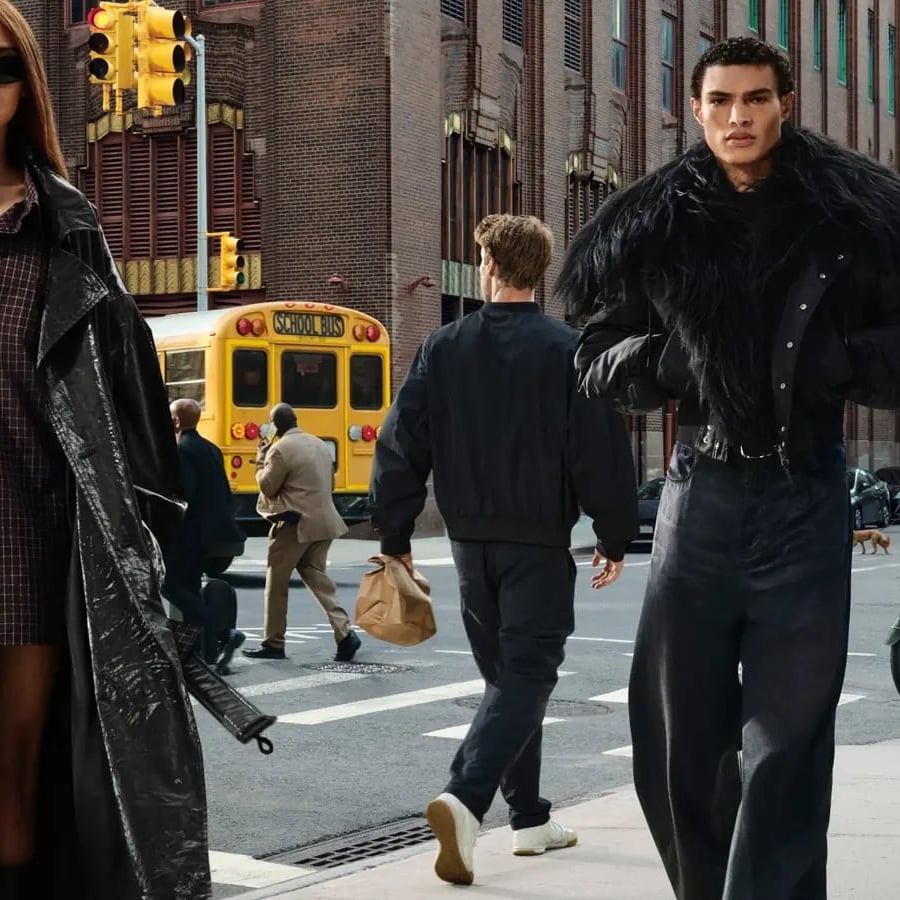
For GucciCore, Peter Funch photographs New Yorkers of every stripe in one frame. The peacoat and the pencil skirt are the quiet stars.
Most luxury campaigns hand you one face and ask you to want to be it. The GucciCore campaign, released on 21 October 2026, hands you a crowd and lets you pick.
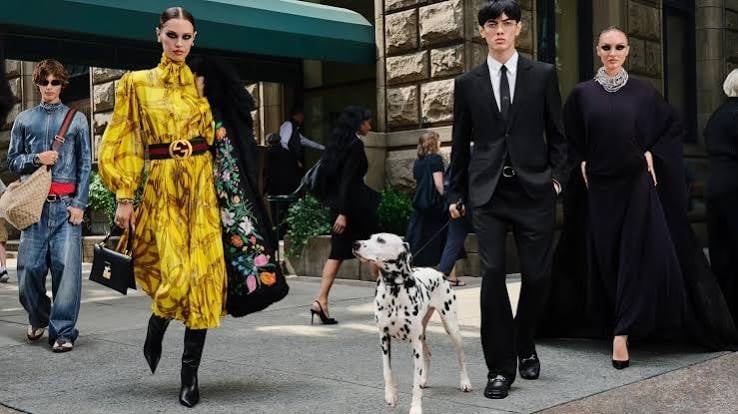
The photographer is Peter Funch, whose long-running work looks at individuals and collectives in urban spaces. Gucci has set him loose in New York, where groups of people share a single frame and look nothing alike. Different appearances, different expressions, one street. The House’s line is that style in this city is rarely a solo act: it moves through crowds, crosses neighbourhoods and bumps into strangers.
Back to Times Square
GucciCore isn’t new to New York. The collection first appeared on the runway in Times Square in May 2026. The campaign is the follow-up, and it changes the pitch. The runway was the moment. The campaign is the aftermath, with people wearing the clothes and going about their day.
The clothes themselves are deliberately familiar. Gucci names the peacoat, the trench coat, the business suit, the essential shirt and the pencil skirt as the core of the wardrobe. These are the pieces that go from office to dinner to whatever comes after without needing a costume change. The House describes the idea as pragmatic dressing in conversation with Italian glamour and elegance.
That’s an unusual brief for a label that built its name on the opposite of restraint. Here the basics come first, and the personality comes from whoever is wearing them. Change the proportions, the texture, the styling or the attitude, and a trench coat says something different on every back.
Why the group portrait matters
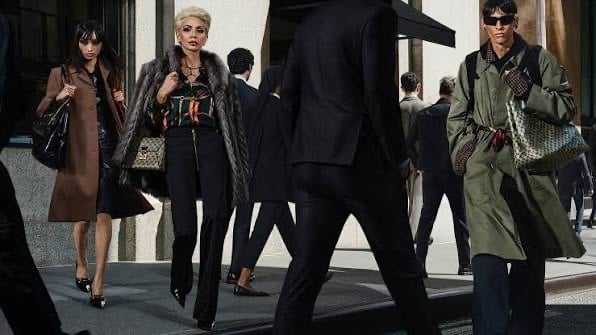
Funch’s way of working suits the idea. Put several people in one urban frame and you get contrast for free: the neat next to the loose, the polished next to the offhand. Nobody is asked to represent a customer type. The picture shows the range and trusts you to find your own spot in it.
There’s a sly bit of advertising logic here. If the wardrobe is a shared vocabulary, as the campaign suggests, the people in the pictures are the proof that it can be spoken in many accents. A uniform would limit who the clothes were for. A vocabulary doesn’t.
It also fits the moment at the House. Gucci was founded in Florence in 1921 and is now under the artistic direction of Demna, with Francesca Bellettini as President and CEO. GucciCore tackles the question of how that heritage meets contemporary culture through the everyday wardrobe, not a single statement piece. The attention lands on how clothes are lived in, combined and adapted.
The shopping part
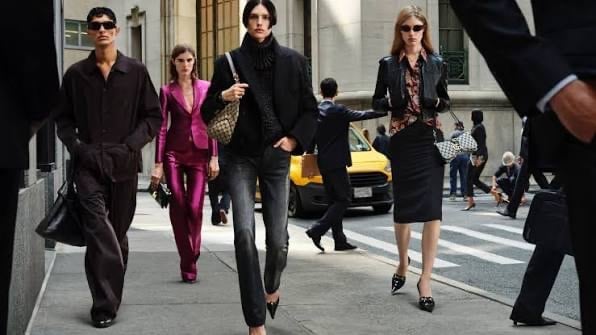
A campaign about ordinary dressing still comes with price tags. Three pieces from Gucci’s wider wardrobe were singled out alongside the launch, all priced in US dollars and subject to change. A Printed Silk Habotai Shirt is US$1,980. The Starlet Medium Shoulder Bag is US$2,390. Mikado Silk Pants are US$1,650. The shirt and trousers bring print and polish to the everyday, and the bag adds an accessory to the mix. Availability and current pricing are best confirmed on Gucci’s official website.
None of that undercuts the premise. The point of a core wardrobe is that you build on it, and Gucci would clearly like you to build on it with silk.
What makes the campaign work is its restraint. Fashion advertising usually sells the exception: the dramatic coat, the bag that stops traffic. GucciCore sells the rule, then asks a crowd of New Yorkers to break it in their own ways. The peacoat gets to be a peacoat. The person inside it does the talking.
Via Luxferity